

This was prompted by a Substack post from Aaron which sent me down a memory spiral.

I was reading something on Substack today where someone was talking about how much they loved Fyodor Dostoevsky. I didn’t recognize the name at first, so of course I Googled it and realized he wrote Crime & Punishment.
Which immediately brought me back to freshman year of high school.
I was in Honors English and had a book report due. We were supposed to choose a book from the “suggested” reading list — which was actually mandatory, just presented like it wasn’t. I hadn’t read a single one of those books, and the report was due, so I did what seemed reasonable at the time: I wrote about a book I had already read.
Some trashy novel called Sunshine about a woman with a lump on her leg who ends up dying of cancer. I don’t even remember if it was good. I was much more interested in boys than books, or Honors English, or doing what I was told.
I fully expected to get away with it.
I did not.
My English teacher — who I did not like at all — called my parents in and completely lost his mind. Instead of failing me outright, he told them he’d give me time to read another book from the list and write a new report so I wouldn’t fail the project. Very generous. Truly. Such an effin nice guy.
So I had to pick a real book this time.
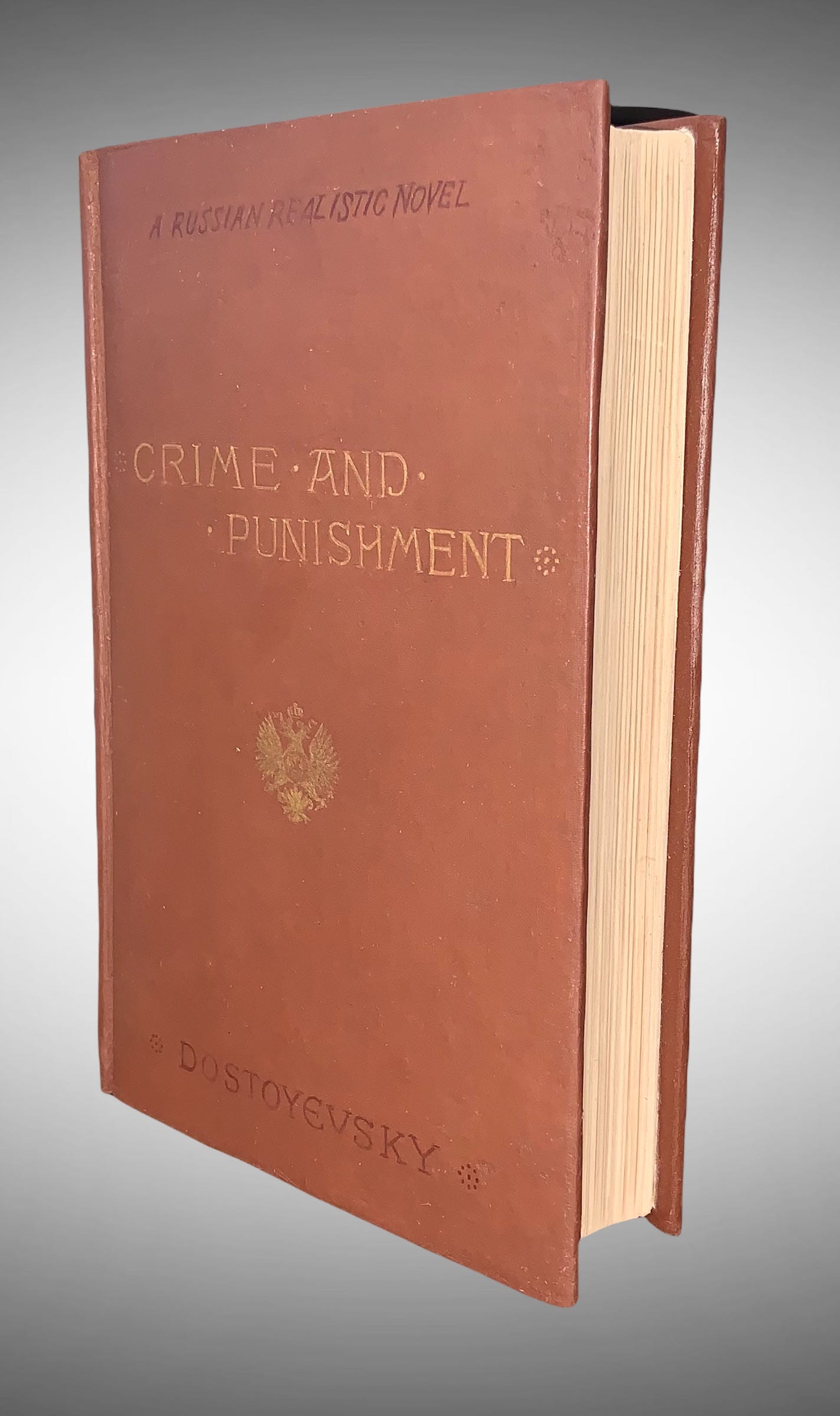
I chose Crime & Punishment. It seemed fitting. If I was going to be punished, I might as well lean into it
.
I hated it.
It was an old, smelly, musty hardcover that smelled like a library basement and dust. I had to read it with a dictionary next to me because this was before Google, back in the olden days. There were so many words I didn’t know, and I remember thinking: how am I supposed to write a report when I don’t even understand what he’s saying?
It took forever. I’d read a few sentences, stop, look up a word, go back, reread, get annoyed, repeat. Night after night. I hated the book. I hated the process. I hated myself for choosing it.
When I finally finished, I was so relieved that I immediately wrote my report about how much it sucked and what a complete waste of time it had been. My parents made me show it to them before I handed it in and told me — calmly, annoyingly — that I might want to rethink that approach. Maybe try to be a little more positive. Or at least less hostile.
So I rewrote it.
And somewhere in all that irritation and effort and teenage resentment, the point finally landed.
Even if you don’t get caught, you still pay for the crime. You don’t let yourself get away with it.
That was my takeaway. That the real punishment wasn’t the police or the courts — it was what happened inside his own head. He suffered more there than he ever could have if he’d just been caught.
I got an A on the report.
The following year, I dropped Honors English entirely, because eff that reading list. But I’ve never forgotten that book, or that experience, or what it taught me — even before I had the words for it.
You don’t really get away with things.
You just carry them until you’re forced to deal with them.
My son wrote a paper on why he hated the book The Scarlet Letter. I was mortified he turned that in, but the teacher gave him an A because he wrote specific details from the book and pointed out why it was an absolutely stupid premise.
“You don’t really get away with things.”
Yep. That part sticks.
Teenage hate-reading, dust smell, stubborn pages... and then the lesson sneaks up and lands anyway. Books play the long game.